Product Description
Industrial Hydrocyclone Machine are widely used in the mineral processing industry for high-throughput coarse/fine particle separation via a vortex effect, or simply slurry dewatering. The advantage of rapid processing by a hydrocyclone is somewhat offset by the high impingement wear rate of the hydrocyclone internal surface lining caused by fast-moving abrasive slurries. As a result, the pipes (inlet and overflow), vortex finder, cyclone chamber, and exit spigot (underflow) must be lined with wear-resistant materials, typically alumina ceramics.
Specification
|
Processing Capacity (m3/h)
|
100 m3/h
|
|
Usage
|
Mineral Processing Industry
|
|
Material
|
Mild Steel
|
|
Voltage (V)
|
415V
|
|
Frequency (Hz)
|
50 Hz
|
|
Phase
|
3 Phase
|
|
Brand
|
Roljack
|
|
Country of Origin
|
Made in India
|
Efficient Solid-Liquid SeparationThe hydrocyclone utilizes centrifugal force to separate solid particles from liquids, achieving up to 90% efficiency. With a sturdy feed pump and precision-designed outlet pipes, the process remains consistent and highly effective, maximizing operational throughput while minimizing losses. This makes it ideal for industries requiring high-volume, rapid separation.
Low Maintenance RequirementsEngineered for durability, the machine features minimal maintenance needs. Routine, periodic inspection is recommended to ensure optimal performance and extend its service life beyond 10 years. Powder-coated mild steel construction means it resists corrosion and wear, reducing overall upkeep and operational costs.
Adaptable for Varied Industrial SettingsWith a processing capability of up to 1000 tons per day and a compact design, the hydrocyclone can be integrated into diverse industrial environments. It is perfectly suited for manufacturers, distributors, and suppliers looking for reliable separation technologies in India, especially for operations handling high solid content feeds.
FAQ's of Industrial Hydrocyclone Machine:
Q: How does the Industrial Hydrocyclone Machine operate to separate solids from liquids?
A: The machine utilizes centrifugal force generated by the electric motor-driven spinning action to separate solids from the liquid stream. Denser solid particles move outward to the wall, while lighter liquids are directed towards the center, allowing for effective separation.
Q: What routine maintenance is required for the hydrocyclone, and how often should it be performed?
A: Maintenance is minimal; however, periodic inspection of key components such as the feed pump, outlet pipes, and control panel is recommended. This ensures long-lasting performance and helps prevent unexpected downtime or wear issues.
Q: Where is the best place to install this hydrocyclone machine within an industrial setup?
A: The machine is ideally placed at the point where solid-liquid separation is needed, often downstream of material processing units. Ensure it is located near power sources and has adequate space for accessory connections and maintenance access.
Q: What is the benefit of using a powder-coated mild steel construction for this machine?
A: Powder-coated mild steel offers enhanced durability and resistance to corrosion, helping the machine maintain structural integrity and appearance throughout its service life, even in challenging industrial environments.
Q: When is the optimal time to inspect or service this equipment?
A: Periodic inspections should occur according to your operational schedule-typically quarterly or biannually, depending on usage intensity. Service is generally only required if inspections reveal wear or potential issues.
Q: What industrial processes or applications can benefit from this hydrocyclone machine?
A: This machine is suitable for any process involving high-volume solid-liquid separation, including mineral processing, wastewater treatment, and manufacturing industries handling slurry or similar materials.


 Mon-Sat 9.00 AM - 6.00 PM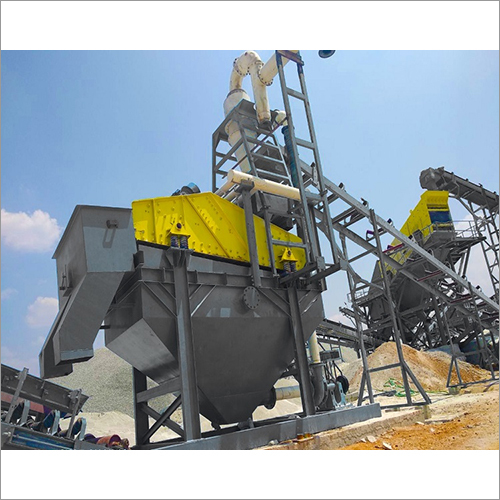





 Send Inquiry
 Send Inquiry
 Send SMS

 English
 Spanish
 French
 German
 Italian
 Chinese (Simplified)
 Japanese
 Korean
 Arabic
 Portuguese